Türkçe
8 Critical Criteria to Consider When Choosing a Kiosk
25.06.2025How Do You Identify the Right Kiosk Solution for Your Business?
For businesses investing in digital transformation, choosing the right kiosk is more than a hardware investment; it is a strategic decision that directly affects the customer experience, operational efficiency, and long-term operating costs. Today, kiosk systems are used across many sectors, from retail and healthcare to manufacturing facilities and public institutions, and stand out for their designs that can be customized to meet different needs.
However, not every kiosk system is suitable for the same use case. Choosing a system without evaluating factors such as its intended purpose, physical environment, software integration, and technical infrastructure can prevent it from delivering the expected efficiency. For this reason, it is essential to analyze requirements accurately before beginning the investment process.
Clearly Define the Kiosk’s Intended Purpose
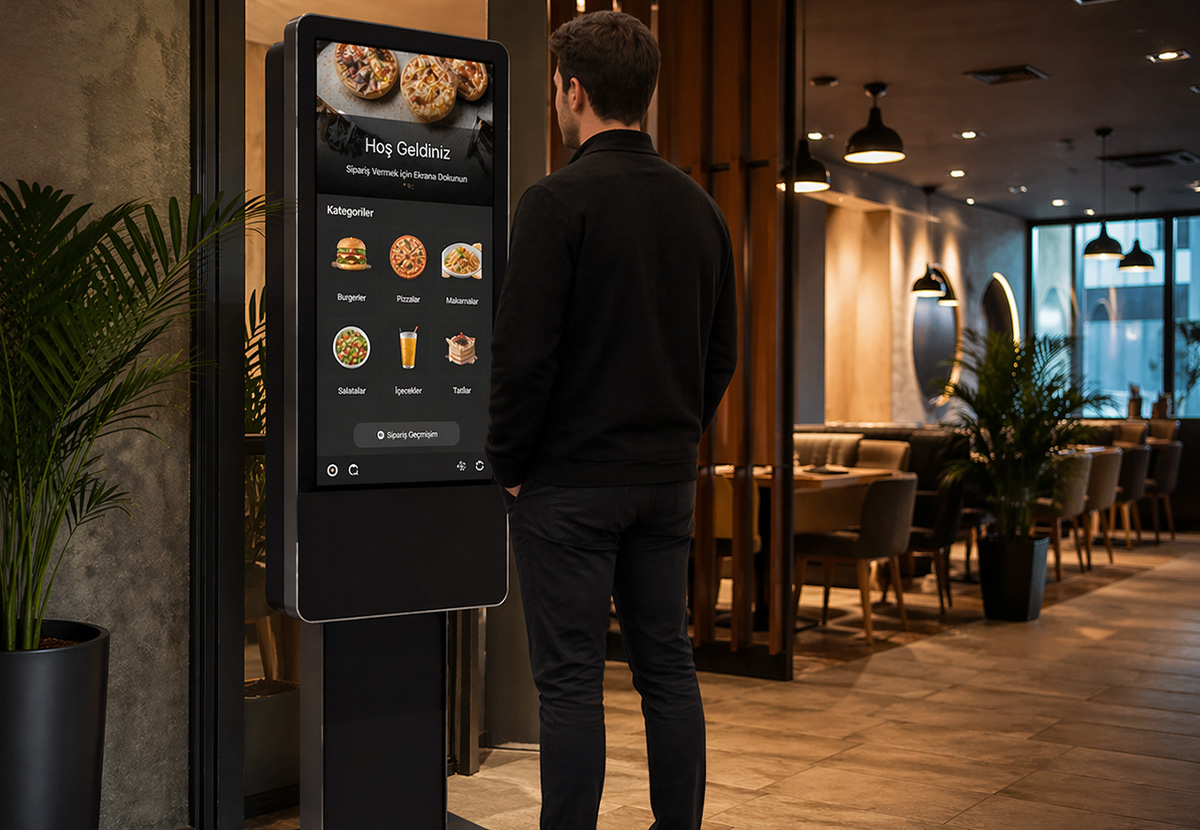
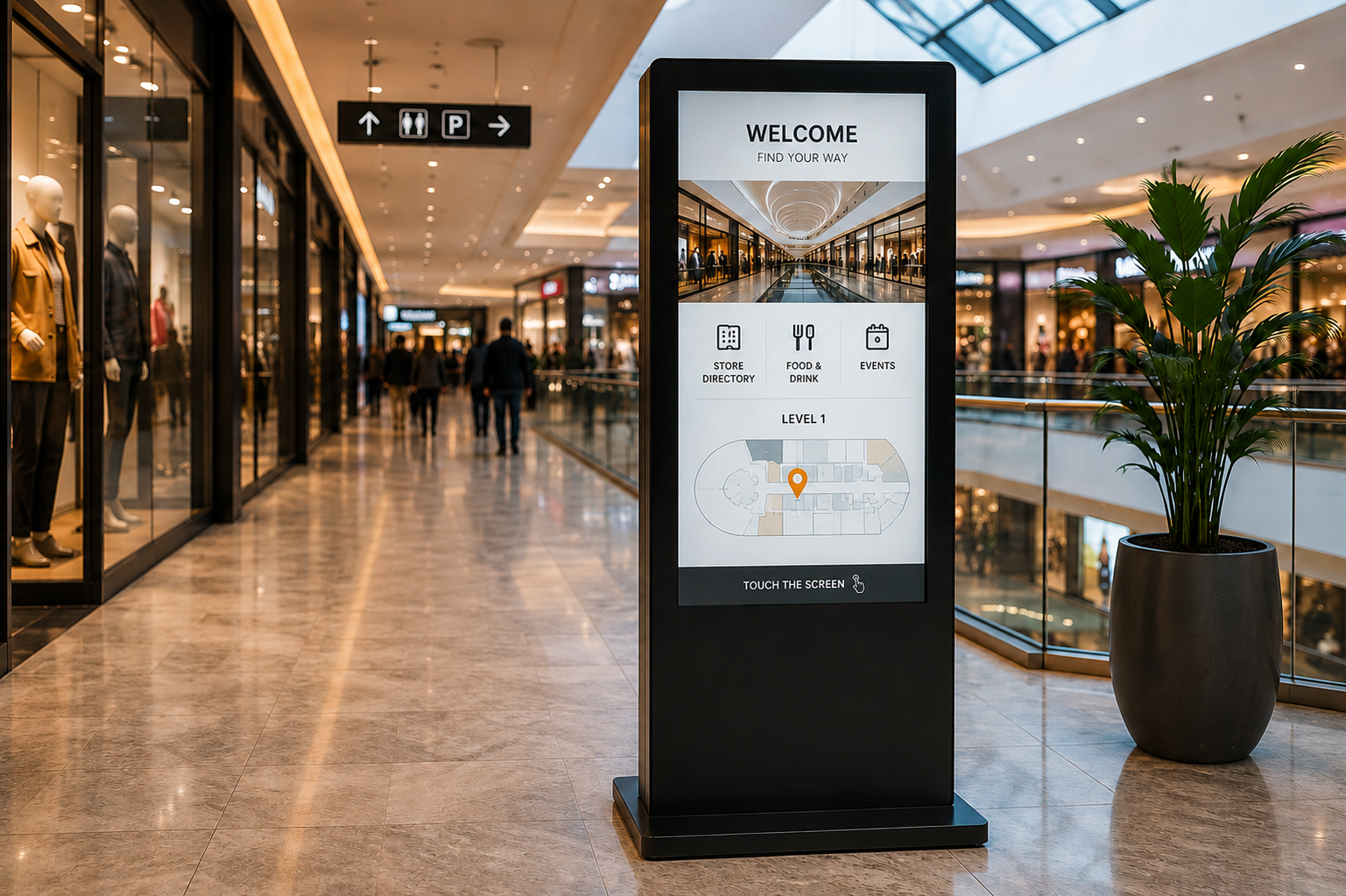
The first step in a successful kiosk project is to determine what the system will be used for. Different kiosk solutions should be selected for different scenarios, such as providing information, registering visitors, processing payments, placing orders, offering wayfinding assistance, or browsing products.
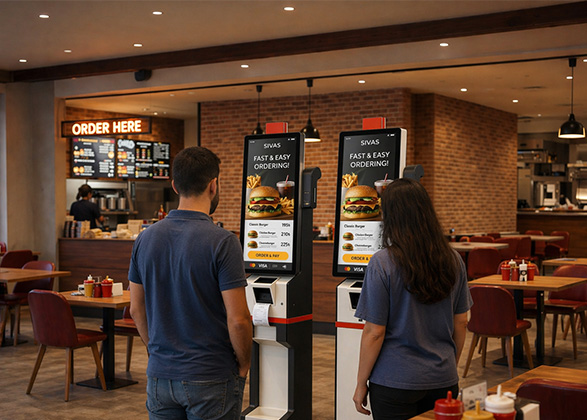
For example, an information kiosk used in a hospital does not have the same hardware and software requirements as a restaurant ordering kiosk. Clarifying the use case makes it possible to select the right hardware and avoid unnecessary software costs.
Choose the Right Model for Indoor or Outdoor Use
The environment in which kiosk systems will be used is one of the deciding criteria in product selection. There are significant technical differences between kiosk solutions intended for indoor use and models developed to withstand outdoor conditions.
Outdoor kiosks should feature high-brightness displays, suitable water and dust protection ratings, industrial components capable of operating across wide temperature ranges, and reinforced enclosures that resist vandalism. For indoor applications, aesthetic design, ergonomics, and the user experience take greater priority.
Evaluate Kiosk Hardware, Software, and Durability Together
Touchscreen Technology Determines the User Experience
The screen is the first point of interaction with a kiosk system. For this reason, the touchscreen’s sensitivity, response time, and image quality directly affect the user experience.
High-resolution displays, multitouch support, and responsive panel technologies allow users to complete their tasks more easily. A durable, scratch-resistant screen also provides a significant advantage, particularly in areas with heavy usage.
Evaluate Software and Integration Capabilities
Modern kiosk systems consist of more than just hardware. A robust software infrastructure forms the foundation for efficient system operation.
The kiosk solution’s ability to integrate with existing ERP, CRM, POS, payment systems, or visitor management platforms significantly simplifies operational processes. At the same time, software with centralized management capabilities allows kiosk devices in different locations to be updated and managed from a single dashboard.
A flexible software architecture should also be able to adapt easily to new business requirements that may arise in the future.
Industrial Durability Ensures Long-Term Performance
Kiosk systems operate under heavy usage throughout the day. It is therefore essential that the selected product be manufactured to industrial standards.
Quality components, a sturdy metal enclosure, an effective cooling system, and durable display technologies reduce maintenance costs while contributing to uninterrupted system operation. Particularly for businesses operating 24/7, durability is one of the factors that directly affect the return on investment.
Accessibility and Ergonomics Should Not Be Overlooked
A successful kiosk design stands out not only for its technological features but also for an ergonomic design that accommodates every user.
Screen height, touchscreen reach, font readability, and interface design should allow users of different age groups to use the system comfortably. Kiosk solutions developed in accordance with universal design principles increase user satisfaction while reducing the time needed to complete tasks.
Investigate Technical Support and Service Infrastructure
The success of a kiosk investment extends beyond the installation stage. After-sales technical support, maintenance services, and access to spare parts are important factors in ensuring that the system operates smoothly for many years.
Working with solution partners that provide remote access support, prompt service response, and regular maintenance helps prevent potential disruptions. A strong technical service network offers a significant advantage, particularly for businesses with multiple branches.
Plan a Kiosk Investment That Is Ready for the Future
As technology continues to evolve, kiosk systems must also be able to adapt to changing needs. Modular solutions allow new hardware to be added or software updates to be applied easily.
Kiosk solutions that support next-generation features such as contactless payment systems, QR code integrations, AI-powered user guidance, remote device management, and data analytics help businesses sustain their digital transformation efforts into the future.
Choosing the right kiosk does more than meet today’s operational needs; it creates a robust technology infrastructure that supports the business’s growth objectives. When suitable hardware, flexible software, high durability, and professional technical support come together, kiosk systems become a strategic investment that delivers value to businesses for many years.