Türkçe
A Flawless Content and Design Guide for Effective Digital Screens
17.08.2026The Secret to Success in Digital Signage Projects: A Strategic Content and Design Guide
In today's competitive business world, businesses are constantly searching for new communication channels to capture their target audience's attention and build a lasting connection with them. Rapidly replacing traditional billboards, digital signage technologies open the doors to a dynamic, flexible, and measurable world for brands. However, many businesses focus solely on screen quality, hardware specifications, and software infrastructure when making digital signage investments. Yet, the most critical element that separates a successful digital signage project from an ordinary screen installation is the strategically correct planning of the content broadcasted on the screens.
An impressive digital screen does more than just offer high-resolution and bright images; it creates true commercial value with content that captures the audience's immediate attention, delivers the message within seconds, and drives the user to take action. Professionally prepared digital signage content increases brand awareness, takes the customer experience to the next level, and creates a powerful communication channel that directly supports sales processes. Therefore, content design and strategy are just as critical as the screen technology being used.
1. Know Your Target Audience Closely for the Right Strategy
The first step to successful content planning and long-term success is to accurately analyze the expectations, habits, and psychology of the target audience in front of the screens. A digital signage screen used in a common area of a shopping mall and an announcement screen in a manufacturing plant's cafeteria should definitely not have the same content approach. Each medium has its own unique dynamics and viewer profile.
-
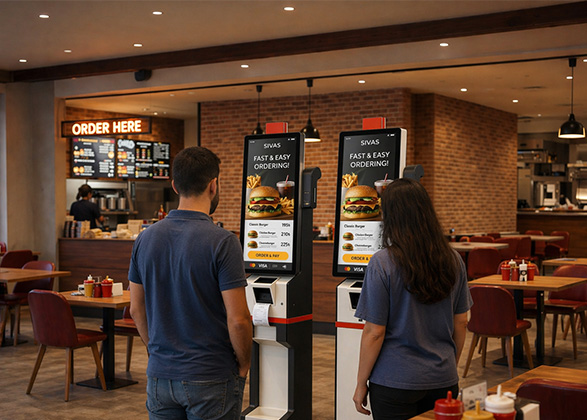
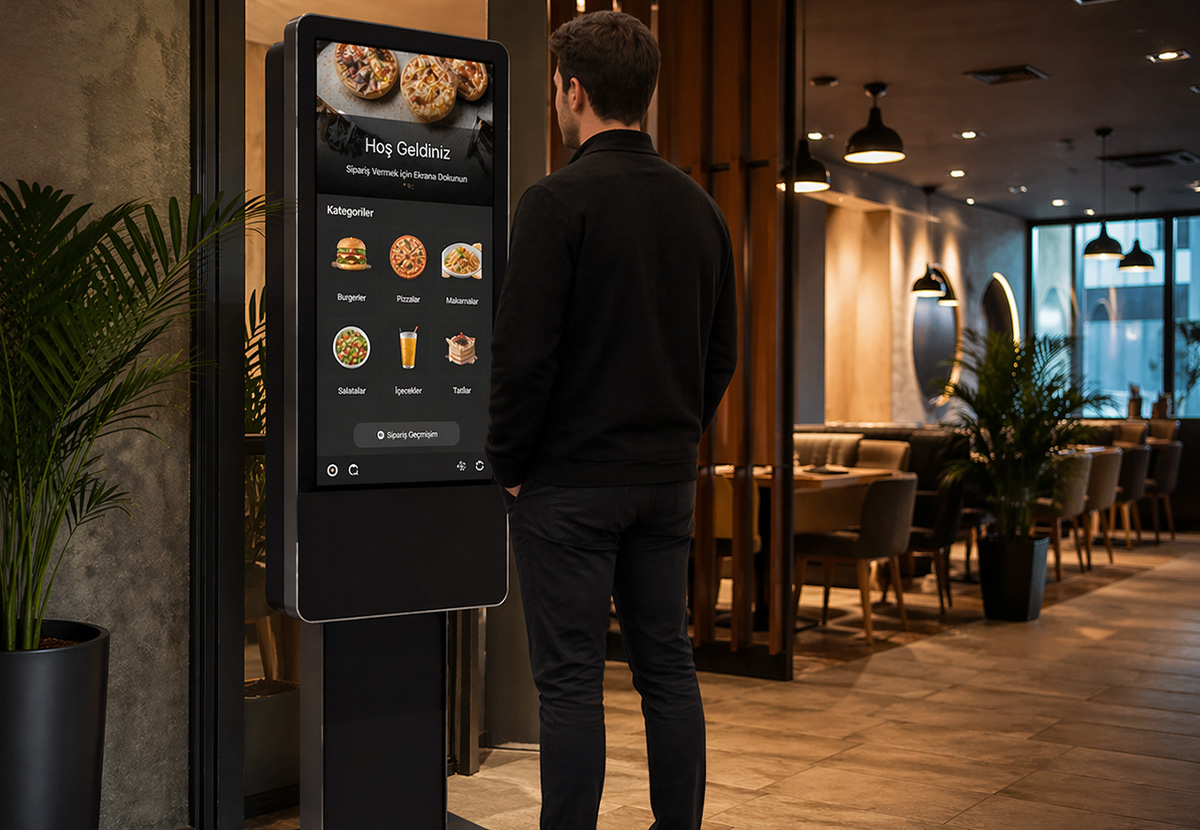
Retail Sector: Attractive campaigns, discounts, and new arrivals are brought to the forefront to trigger customers' excitement and sense of discovery during shopping.
-
Corporate Offices: Announcements, performance data, and internal communication content gain weight to increase employee motivation and strengthen internal belonging.
-
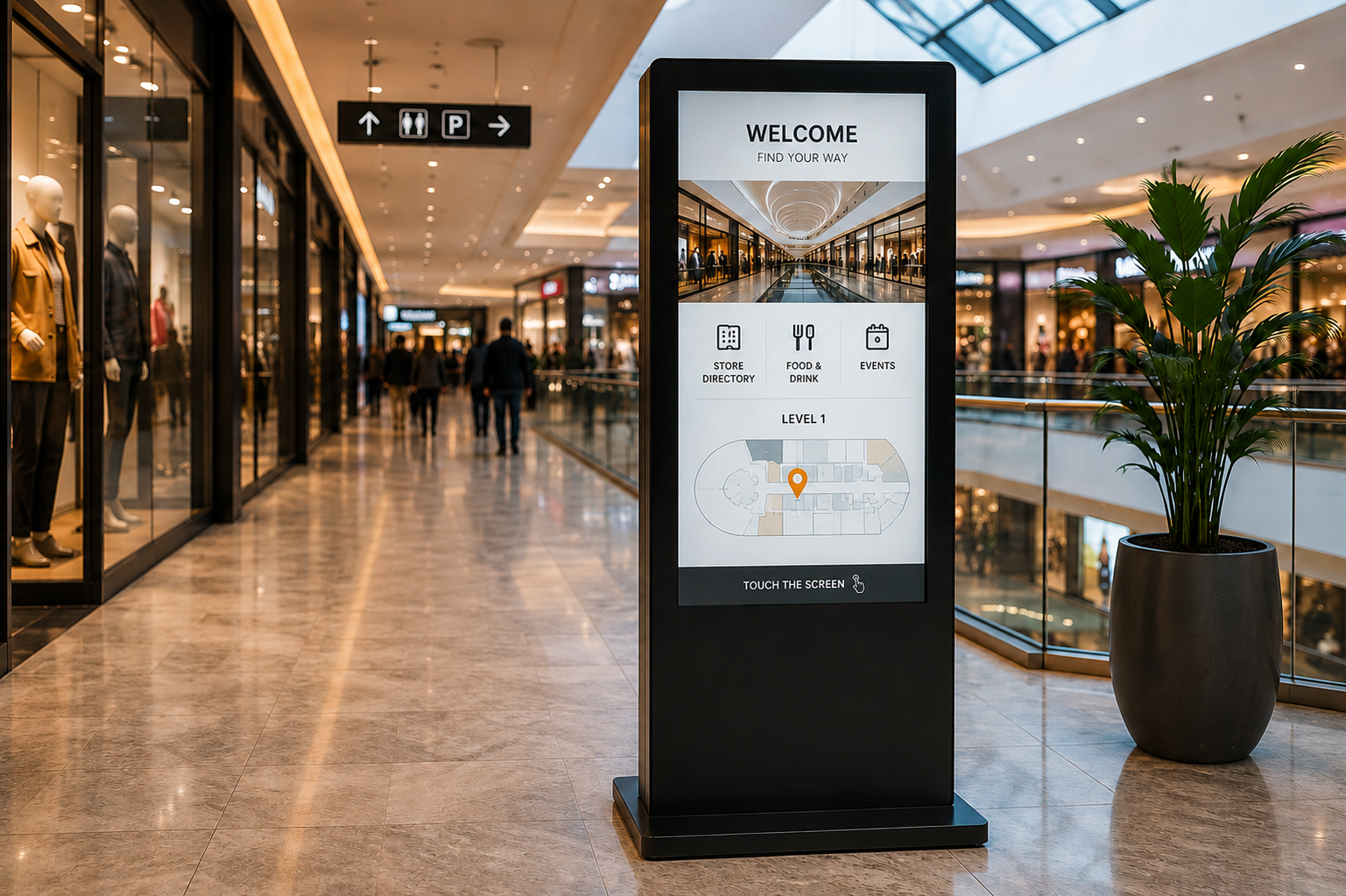
Healthcare Institutions: Wayfinding, information, and health tips are at the forefront to reduce patients' stress and organize in-hospital mobility.
-
Educational Institutions: Course schedules, campus events, and urgent announcements yield more effective results for students and academics to stay updated.
The physical environment where the content will be broadcast, the target audience's current mindset, and the purpose of use should be evaluated as a whole; accordingly, a comprehensive and sector-specific content strategy must be created.
2. Stay Away from Clutter: Minimalist Screen Designs
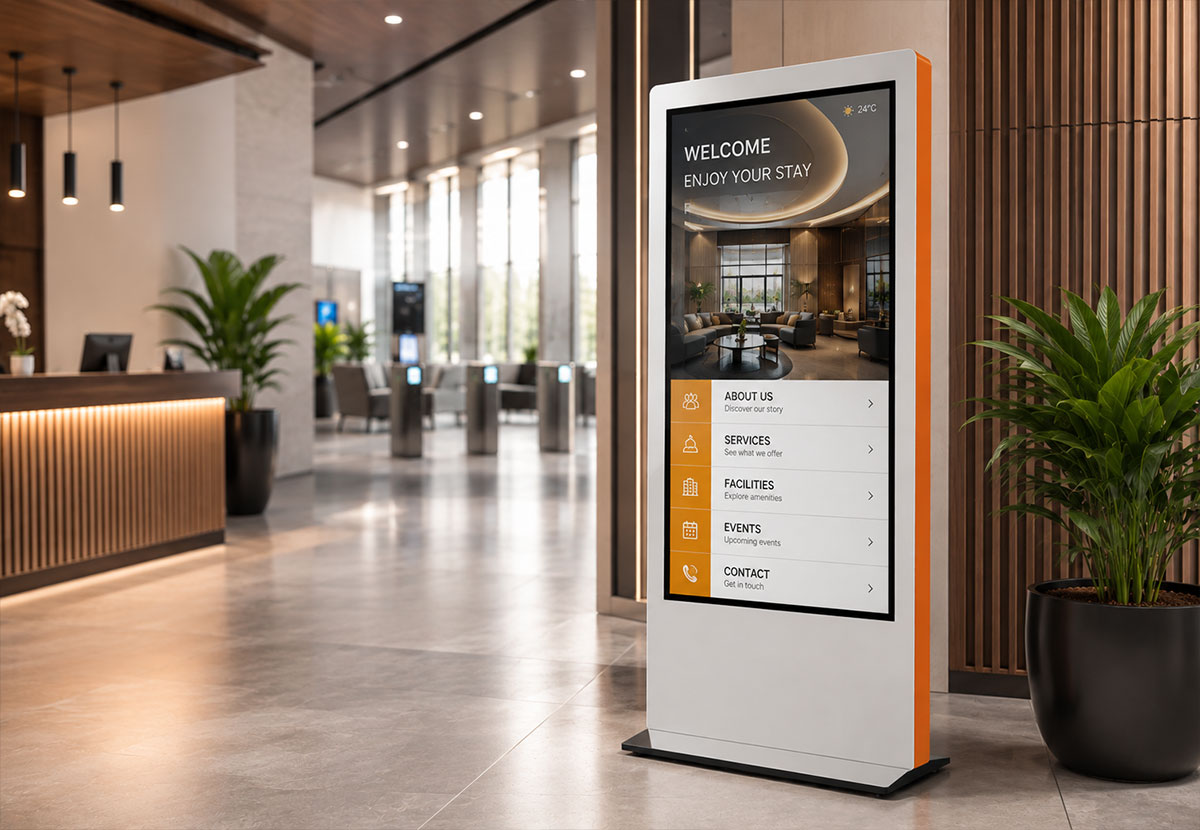
One of the most common mistakes businesses make in digital signage screens is trying to present too much information, text, and visuals simultaneously in order to fill the screen space. Crowded, complex, and noisy designs make it impossible for users to grasp the main message and reduce the marketing impact of the screen to zero. The human brain is programmed to filter out visual clutter; therefore, simplicity is always the greatest power.
For a successful digital screen design, fonts with high readability should be used, colors providing high contrast between the background and text should be preferred, and a flawless visual hierarchy must be established. Headings should catch attention in the very first second, while supporting texts should be kept as short and clear as possible. Especially in areas with heavy human traffic and fast flow, such as streets, store entrances, or mall corridors, visitors can examine the screen for only a few seconds. Delivering the message completely within this limited time frame requires great professionalism.
3. Eye-Catching Moving Graphics and Video Usage
Video, 2D/3D animations, and smooth transition effects are the biggest and most powerful advantages digital signage systems possess compared to traditional printed advertisements. Static visuals can catch attention up to a point, but moving elements trigger the human eye's natural reflexes, ensuring lock-in on the screen. However, moving content must be used consciously, moderately, and in accordance with aesthetic rules.
Instead of constantly changing, eye-straining, and overly fast-flowing complex animations, fluent and soft transitions that do not tire the viewer's eyes but support the message with an aesthetic language should be preferred. Product introductions, exciting campaign videos, and creative motion graphic works telling the brand's story multiply the interaction power of screens. Video content that is correctly planned and precisely staged lengthens the duration of visitors' stay and focus in front of the screen while directly contributing to carving the brand perception into their minds.
4. How to Establish Color Harmony and Typography Balance?
Color selection in professional digital signage designs is not a random aesthetic choice made simply because it "looks nice to the eye." It must be based directly on neuromarketing principles. Color palettes supporting the brand's corporate identity and character should be chosen, and the principle of readability must be kept at the highest level under all circumstances. Wrong color choices lead to a customer looking from afar being unable to read the texts, rendering the content useless.
Dark texts on a light-colored background or, conversely, high-contrast light colors on a dark-colored background should be chosen to make the content readable from all angles. In addition, using too many different fonts in designs should be avoided; instead, a consistent design style should be maintained throughout the entire broadcast by choosing at most one or two font families reflecting the corporate identity. The right balance established between headings, used visuals, and call-to-action texts ensures that the viewer makes sense of the intended message in their brain within seconds.
5. Conversion-Focused CTA (Call to Action) Strategies
Behind every successful digital signage content lies a clear mission and a specific business objective. It is insufficient for the viewer to merely watch the screen passively and pass by; they should also be targeted to take a specific action desired by the brand. Digital screens are one of the most effective tools bridging in-store physical traffic to the digital world.
-
"Discover the new collection now"
-
"Scan the QR code with your smartphone"
-
"Review the special campaign"
-
"Get detailed information from the information desk" or "Contact us immediately"
Clear, dominant, and directive call-to-action messages (CTAs) such as these can significantly increase the conversion rates and direct sales contribution of screens. These call-to-action texts should be short, punchy, understandable, and eye-catching; they should be displayed in the right positions as a natural part of the screen design that does not strain the eye.
6. Stay Fresh with Regular Content Updates
Even the most flawlessly designed digital signage system loses its impact over time if there is no sustainable and dynamic content management behind it. A successful structure stays alive not only with quality hardware and screens, but also with fresh content regularly updated. Expired campaigns, old price tags, or outdated old announcements directly damage the brand's professional image and consumer trust.
Thanks to advanced centralized content management systems (CMS), hundreds of screens located in different cities or branches can be managed within seconds via a single central panel. Automatic content planning can be done within specific date ranges and according to the hours of the day (such as morning coffee menu, evening dinner menu). Thus, the most accurate content is always brought together with the target audience at the right time on screens in all locations, eliminating operational overhead and achieving maximum efficiency.
Final Word: Create Long-Term Value with Quality Content
Achieving maximum commercial efficiency from digital signage projects is never possible solely by purchasing top-segment screen technologies. When a strategic content plan, flawless visual design, in-depth user experience analysis, and seamless content management come together, cold digital screens transform into the brand's warmest, most effective, and most profitable communication tool.
Professional digital signage content prepared in full compliance with the business's vision and goals skyrockets brand visibility, strengthens customer engagement, supports internal corporate communication, and lays the groundwork for the technology investment made to generate long-term financial value. It is high time to crown the technological power of your screens with your flawless content strategy to leave lasting marks in the digital world and stay one step ahead of your competitors.